When RAG Is the Wrong Solution
Retrieval-augmented generation has become the default answer to every enterprise AI question. It shouldn't be. Here's how to tell when it's the wrong tool.
RAG — retrieval-augmented generation — is a genuinely good pattern. It grounds a language model in your own data, keeps knowledge current without retraining, and gives you citations you can check. It deserves its popularity.
But popularity has turned it into a reflex. “We need an AI assistant” now maps almost automatically to “so we need RAG,” and that reflex quietly ships complexity into places that didn't need it. Here are the situations where I push back.
When the question is really about structured data
A surprising share of “chatbot” requests are actually analytics questions in disguise: How many accounts renewed last quarter? What's our average handle time by region? Those answers live in tables, and they have exact, correct values.
RAG is the wrong tool here. Embedding rows and retrieving “relevant” ones will give you an approximate, unauditable answer to a question that has a precise one. The right pattern is text-to-SQL over a semantic layer — let the model translate the question into a query against defined metrics, and return the exact number. It's cheaper, it's correct, and it's explainable.
If the answer is a number that has to be right, you want a query, not a retrieval.
When the corpus is tiny and static
RAG earns its complexity when knowledge is large, changing, and permissioned. If your entire knowledge base is a dozen pages of policy that change twice a year, standing up an ingestion pipeline, a vector index, and a retrieval layer is a lot of moving parts to maintain.
Often you can just put the relevant content directly in the prompt. It's simpler, there's nothing to keep in sync, and for a small enough corpus the quality is as good or better. Add the index when the corpus outgrows the context window — not before.
When the knowledge should be in the model's behavior
RAG injects facts. It does not teach the model a skill or a style. If what you actually need is for the model to consistently follow a format, adopt a tone, or perform a specialized task, retrieval won't get you there — you're looking at prompt engineering or fine-tuning, not a vector store.
A good diagnostic question: am I trying to give the model new information, or new behavior? RAG only helps with the former.
When you haven't defined what a good answer is
This one isn't about the data — it's about readiness. If nobody has agreed on what a correct answer looks like or how you'll measure it, adding RAG just gives you a more elaborate system to argue about. Retrieval quality is measurable, but only against a labeled set someone actually built.
I'd rather spend the first week defining evaluation than the first month tuning a pipeline toward an undefined target.
So when is RAG right?
When all of these are true:
- The knowledge is unstructured (documents, not tables).
- It's large enough that you can't just prompt with it.
- It changes often enough that baking it into a model would go stale.
- Answers need to be grounded and cited for trust.
- You have — or will build — a way to evaluate answer quality.
When that's the shape of the problem, RAG is exactly right, and the Enterprise RAG architecture is where I'd start. The point isn't that RAG is bad. It's that “reach for RAG by default” is bad. The best architects I know reach for the simplest thing that solves the actual problem — and sometimes that's a SQL query.
Related projects
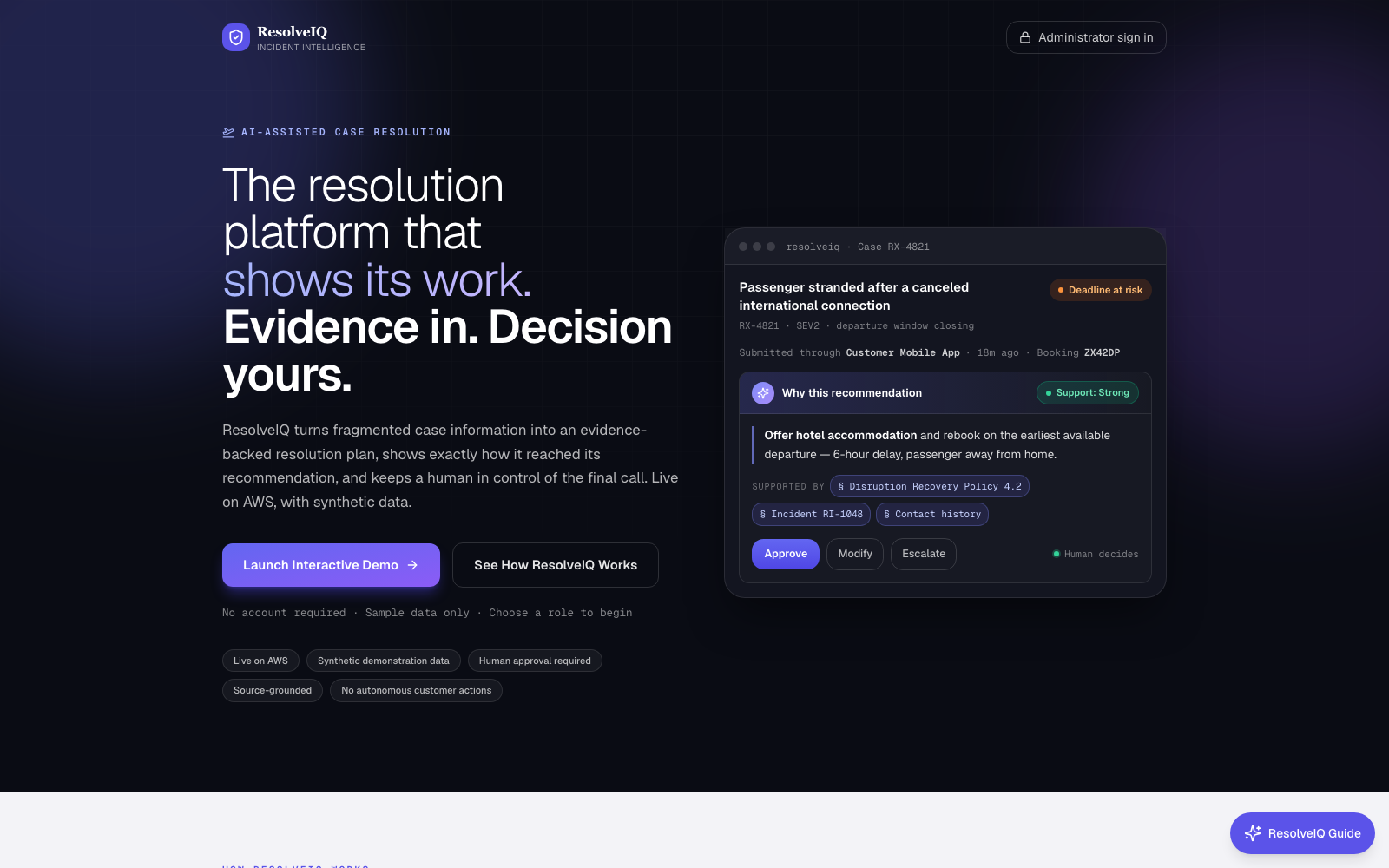
ResolveIQ — Enterprise AI Case Resolution
An AI platform that turns fragmented, high-risk support cases into cited, evidence-backed resolution recommendations, and keeps a human in control of every decision.
Problem
Enterprise support teams sit on scattered case data and tribal knowledge, and most AI demos ignore the governance reality of acting on a real customer account.
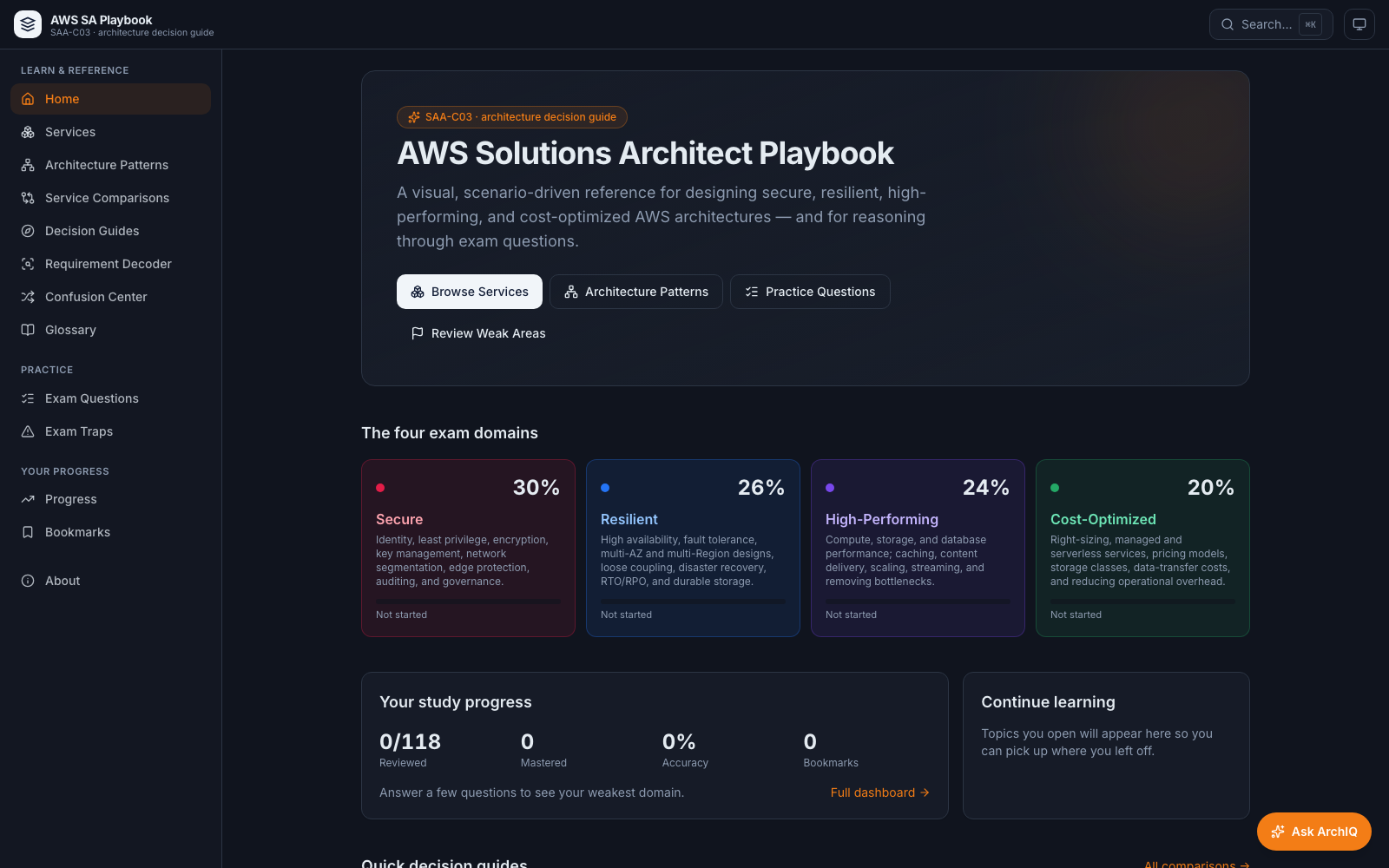
ArchIQ — AWS Solutions Architect Study Platform
An interactive AWS Solutions Architect (SAA-C03) playbook with 118 topics, decision guides, and a grounded AI tutor that answers only from the material it can cite.
Problem
Most cert prep is passive recall. The harder skill, and the one the exam actually tests, is reasoning through architecture trade-offs under real constraints.
Keep reading
Agentic AI vs. Structured AI Workflows
The word 'agent' is doing a lot of work in enterprise conversations right now. Most of the time, a structured workflow is the better answer — here's how to tell the difference.